Home › Guides › What is transposing: moving a song to your voice, and how it relates to the capo
What is transposing: moving a song to your voice, and how it relates to the capo
What transposing (changing key) means, counting semitones, finding the key that fits your voice, the difference between transposing and a capo, and when to use which.
Transposing means moving every chord in a song up or down by the same amount. If a song is in C major and you take it two semitones down, it is in Bb major: C → Bb, F → Eb, G → F, Am → Gm. Every relationship between melody and chords is kept; only the centre moves. It is the first thing to do with any song your voice cannot reach — or that sits too low.
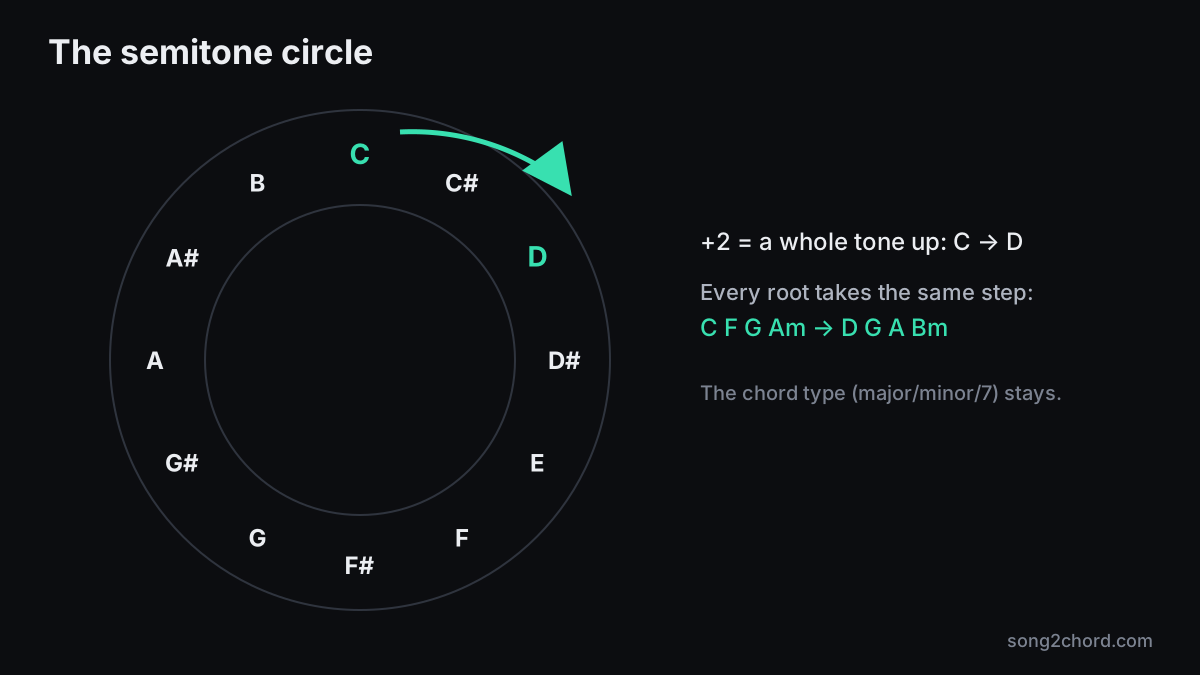
Counting semitones
Twelve notes form a circle: C, C#, D, D#, E, F, F#, G, G#, A, A#, B, then C again. (C# and Db are the same pitch; which name is written depends on the key.) Transposing is how many steps you take around that circle. +2 is a whole tone up, −3 a tone and a half down. Every chord's root moves the same number of steps; the chord type (major, minor, 7th) does not change.
| Original | −2 | −1 | +1 | +2 | +3 |
|---|---|---|---|---|---|
| C | Bb | B | C#/Db | D | Eb |
| G | F | F#/Gb | G#/Ab | A | Bb |
| Am | Gm | G#m | Bbm | Bm | Cm |
| Em | Dm | D#m | Fm | F#m | Gm |
| D | C | C#/Db | Eb | E | F |
Finding the key that fits your voice
- Find the song's highest note: hum the top of the chorus. Comfortable, a strain, or out of reach?
- If it strains, take it down a semitone and try again. If it is out of reach, two or three.
- Now check the lowest note — usually the start of the verse. If that still sounds, this is your key; if it drowns, you are caught in between: go up one semitone and sing the chorus lightly in head voice.
Rule: transpose with the highest and lowest note in mind. Dropping four semitones for the chorus alone leaves you drowning in the verse.
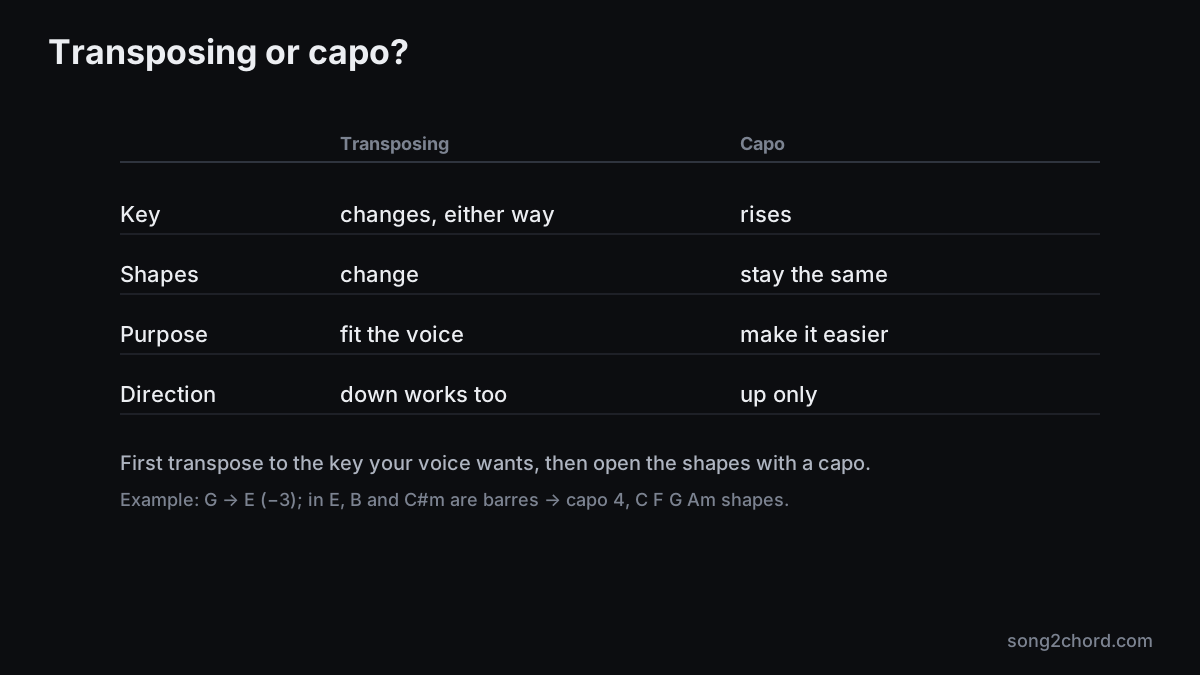
Transposing or capo?
Both look like "playing in another key", but they do opposite jobs:
| Transposing | Capo | |
|---|---|---|
| Key | Changes, either direction | Rises |
| Shapes | Change (new chords) | Stay the same |
| Purpose | Fit the voice | Make the shapes easier |
| Direction | Down works too | Up only |
In practice you use both: first transpose to the key that fits your voice, then if that key brings barre chords, open the shapes with a capo. Example: the song is in G, your voice wants E (−3). In E the chords are E–A–B–C#m, with B and C#m as barres. Capo 4 lets you hold C–F–G–Am: sounding key E, open shapes (except F). Or capo 2 with D–G–A–Bm; whichever leaves fewer barres. See the capo guide.
Transposing on our pages
The − and + buttons next to the chord list on every song page move the song a semitone down or up; chord names, chord boxes, fretboard shapes and the capo suggestion are all recomputed for the new key. In karaoke mode the backing track moves by the same amount, so you really can sing in the key that suits you. Chord spelling follows the new key too: in Bb the page writes Eb, not D#; in F# it writes C#, not Db. That answers the "which name from the table" question and is a mistake many chord sites make.
Playing with others
Tell everyone the key you transposed to — "in D", not "C with capo 2". Bass and keys do not use capos; they need the real key. Among guitarists the safest language is real key + capo fret + shape: "key of D, capo 2, C shapes". The "original key" and capo suggestion on our pages give you exactly that trio.
In short
Transposing moves every chord by the same number of semitones; it is for fitting the voice. A capo keeps the shapes and raises the key; it is for making things easier. Find the singable key first, then open the shapes with a capo. If finding the key is the hard part, read how to find the key of a song.