Home › Guides › How to find the key of a song: by ear, from the chords, and with a table
How to find the key of a song: by ear, from the chords, and with a table
What a key is, major versus minor, relative minor, how to read the key off a chord list, and a table of chords in every common key. Also how the "original key" on our pages is computed.
The key is the song's "home" note: where the melody comes to rest, the centre the chords circle around. Knowing it helps in three ways: you can predict which chords are coming, you know where you are moving from and to when you transpose for your voice, and if you solo you know which scale to use. This guide shows three ways to find it: by ear, from the chord list, and with a table.
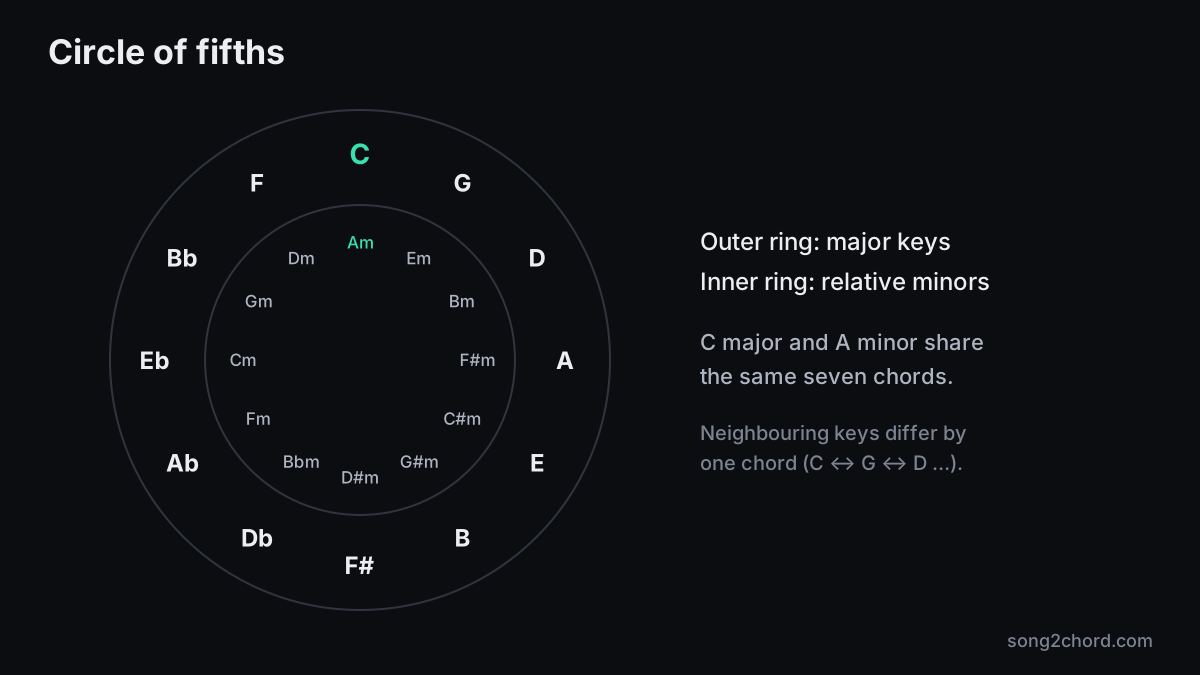
Major or minor
Every key has a major and a minor form, and the two share the same chords: C major and A minor use the same seven (C, Dm, Em, F, G, Am, Bdim). This is the relative minor, found on the sixth degree of the major (C → Am, G → Em, D → Bm, F → Dm). The difference is where the song "comes home": if the chorus ends on C the song is in C major; if on Am, it is in A minor. That is exactly the question our key detection asks, and when the major/minor call is too close, the song is kept out of the key lists.
Method 1: by ear
- Listen to the chorus and stop on its last chord. Hum the note the melody "lands" on.
- Find that note on the guitar. On string 6: fret 1 is F, 3 is G, 5 is A, 7 is B, 8 is C, 10 is D, 12 is E.
- Play the major and the minor chord on that note; whichever matches the song is the key.
This is the most reliable method, but it takes practice. Early on, confirm it with method 2.
Method 2: from the chord list
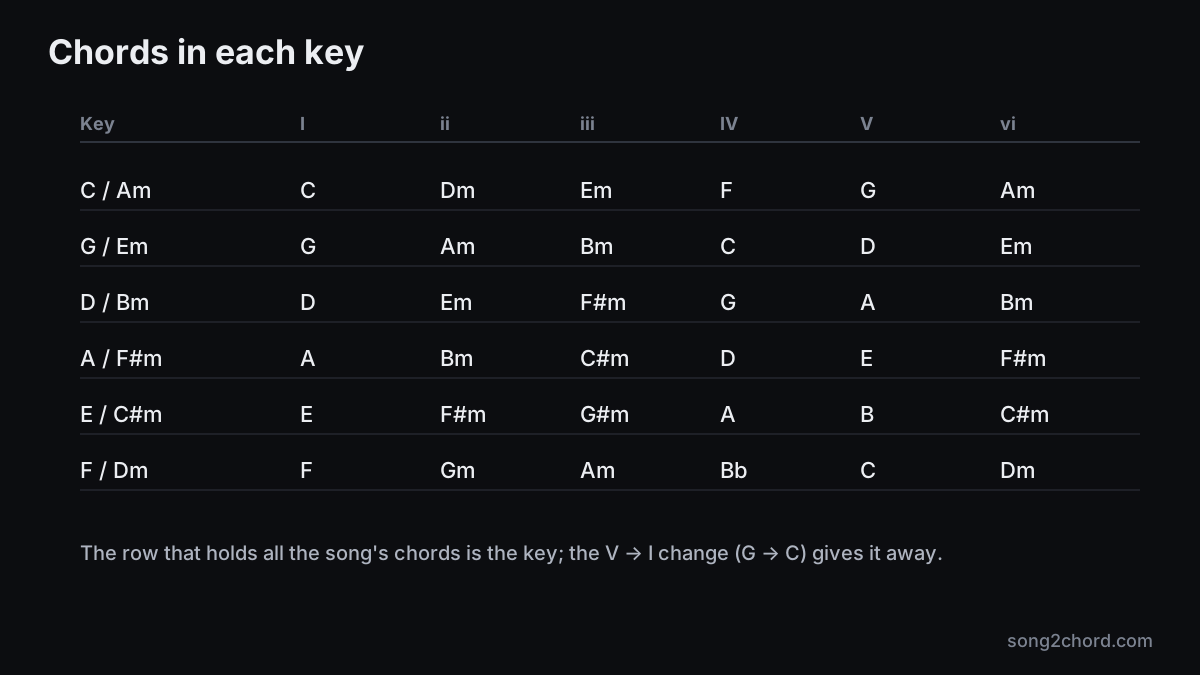
Write down the song's chords and find the row below that contains all of them. Example: G, D, Em, C → the G major row (or its relative minor, Em). Am, F, C, G → C major or A minor; if the song starts and ends on Am, it is A minor.
| Key | I | ii | iii | IV | V | vi |
|---|---|---|---|---|---|---|
| C / Am | C | Dm | Em | F | G | Am |
| G / Em | G | Am | Bm | C | D | Em |
| D / Bm | D | Em | F#m | G | A | Bm |
| A / F#m | A | Bm | C#m | D | E | F#m |
| E / C#m | E | F#m | G#m | A | B | C#m |
| F / Dm | F | Gm | Am | Bb | C | Dm |
| Bb / Gm | Bb | Cm | Dm | Eb | F | Gm |
| Eb / Cm | Eb | Fm | Gm | Ab | Bb | Cm |
A chord that does not fit the row (say, an F in G major) is either a "borrowed" chord or a key change; both are common in pop and rock and do not break the key.
Method 3: the five-chord clue
The strongest pull in any key is V → I: G to C, D to G, E to Am. Find the pair in the song that feels like "tension–release"; the chord it releases onto is the key. In minor keys the V chord is usually made major (E in A minor, A in D minor), so an unexpected major chord in a minor song is the V and gives the key away.
How our pages compute the key
The "original key" on every song page is computed from the chord sequence: each chord is weighted by its duration, each of the 24 keys (12 major, 12 minor) gets a fit score, and the best one is written. Because relative major and minor share chords, the two scores can be close; then the first and last chords of the song break the tie. If the margin is still small, the "key confidence" is low and the song is left out of lists like songs in A minor — the key still shows on the page, but getting into the list needs firmer evidence.
Once you know the key
If the song sits wrong for your voice, change the key with transposing; if that brings barre chords, use a capo to bring the shapes back to open position. Songs in the same key share similar changes, so once one key is under your fingers, picking the next song from that key's list is the fastest way forward.