Home › Guides › How to use a capo: which fret, and what happens to the chords
How to use a capo: which fret, and what happens to the chords
What a capo does, which fret to put it on, how chord names shift when you do — with a lookup table and worked examples. The shortest route out of barre chords.
A capo is a small clamp that presses every string down at one fret. The moment you put it on, the guitar's "zero point" moves to that fret: the open strings now ring at the capo, and every chord shape you know is played that much higher. The result is the same shapes in a different key. That is why a capo is the quickest way to play songs in awkward keys without wrestling barre chords, and it is what a song page means when it suggests "Capo 3".
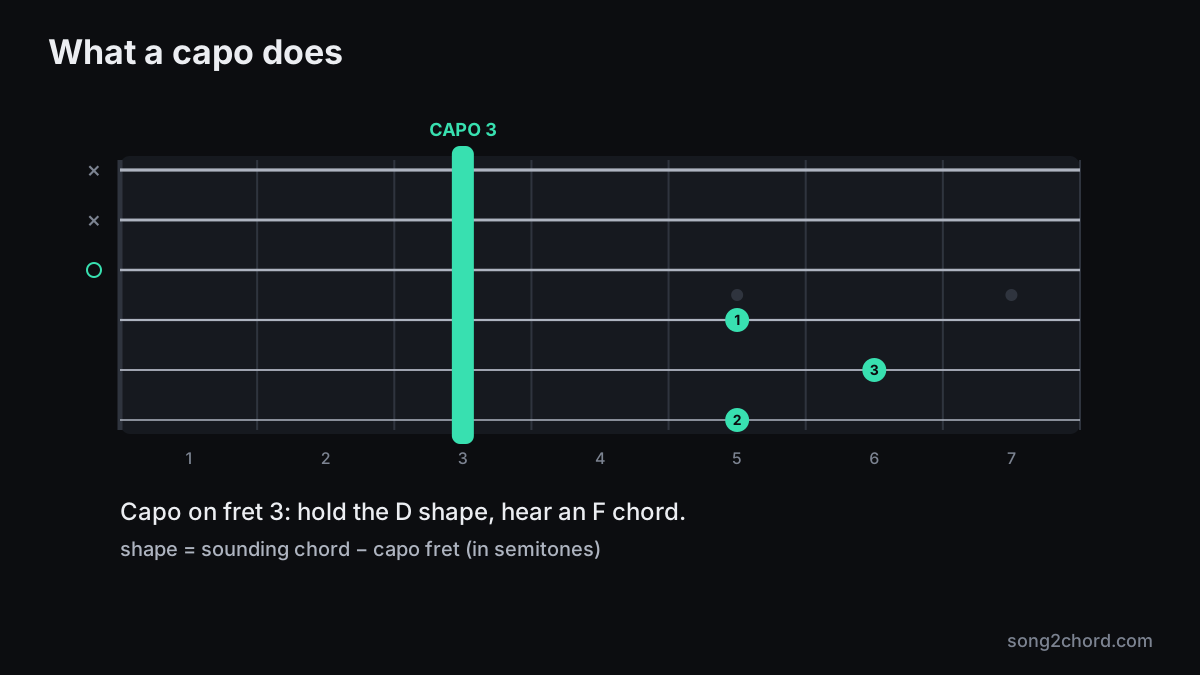
What a capo does — and does not do
A capo raises the pitch; it never lowers it. On fret 1 everything goes up a semitone, fret 2 a whole tone, fret 3 a tone and a half. If you need the song lower, a capo is the wrong tool — that is what transposing is for. A capo also does not change a chord's real name: the C shape you hold with a capo on fret 2 is actually a D chord. Chord names on our pages are always the real, sounding chords; when a capo is suggested, the page lists the shapes to hold separately.
Why you would use one
- To avoid barres. F, Bm, F#m and Bb all want your index finger across the neck. If a song runs F–C–Dm–Bb, capo 3 lets you play D–A–Bm–G: everything but Bm is an open shape.
- To fit your voice. If a song sits a little low for you, move the capo up one or two frets; the shapes stay the same, the key rises.
- For colour. The higher the capo, the shorter and brighter the strings — almost mandolin-like above fret 5. Two guitars, one open and one capoed at 5 or 7, play the same chords in two textures.
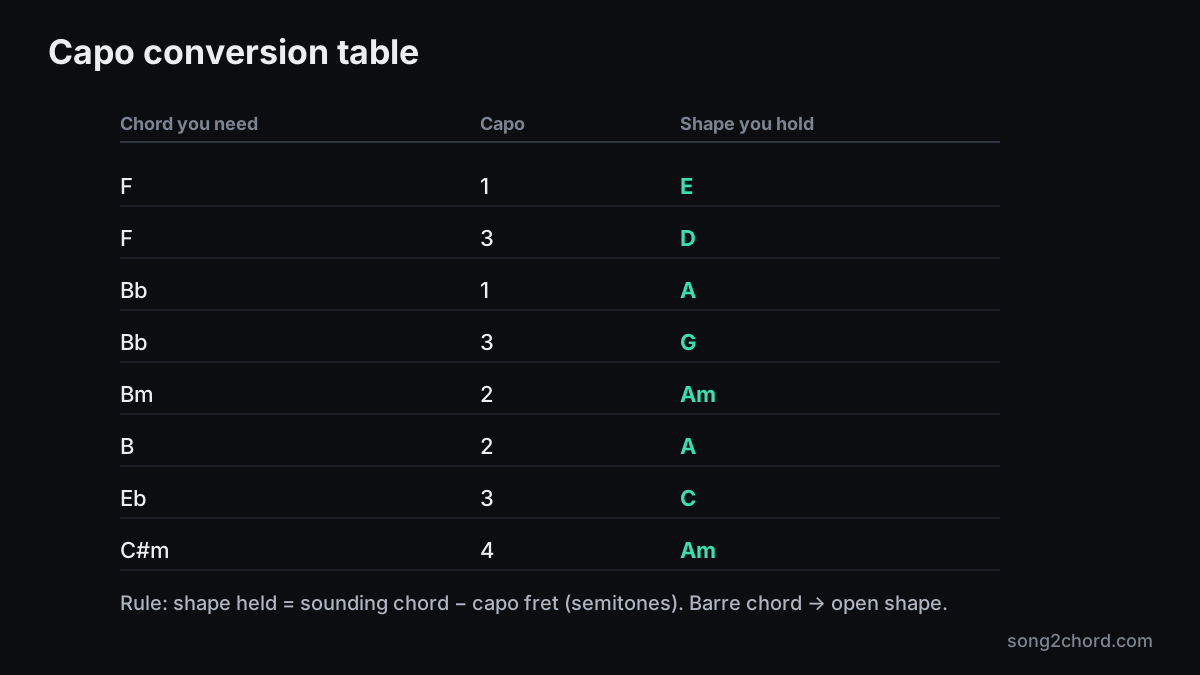
Which fret: the table
The relation between the shape you hold and the chord you hear is simple: the shape sounds as many semitones higher as the capo's fret number. The most common conversions:
| Chord you need | Capo | Shape you hold |
|---|---|---|
| F | 1 | E |
| F | 3 | D |
| F#m / Gbm | 2 | Em |
| Bb | 1 | A |
| Bb | 3 | G |
| Bm | 2 | Am |
| B | 2 | A |
| Eb | 3 | C |
| Ab | 1 | G |
| C#m / Dbm | 4 | Am |
Rule: sounding chord − capo fret = shape held, counting in semitones. Shift every chord in the song down by the same number and pick the fret where the most chords land on open shapes. Our pages do this for you: the "Capo N" suggestion is the fret that leaves the fewest barres.
How to put it on
- Place the capo just behind the fret wire, close to it. In the middle of the fret, or near the previous wire, the strings go sharp and buzz.
- Keep it square to the neck so every string gets equal pressure. A spring capo that is too strong pulls strings sharp; on a screw capo, tighten only until the buzz stops.
- Check your tuning once after clamping. Capos nudge tuning slightly, especially on light strings.
Common mistakes
- Going above fret 5. Past fret 7 the neck narrows, shapes cramp and the tone thins. Unless the song asks for it, stay between frets 1 and 4.
- Forgetting the real key. Telling a bandmate "I'm playing C" while capoed at 2 gives them D. Name the key, not the shape.
- Using a capo instead of learning barres. A capo helps, but if you never learn F and Bm you will one day meet a song you cannot capo. It is a tool, not an escape — see the barre chord guide.
How capos appear on our pages
When a song page says "To avoid barres, put a capo on fret N and play these shapes", the listed shapes are the capoed ones and the key stays original. In our karaoke videos and shorts the capo is drawn directly on the fretboard as a bar, and the chord boxes show the shifted shapes. To browse songs that need no capo at all, see songs without capo; for songs that become easy with one, see easy chords, where each row shows the capo fret.
In short
A capo raises the key and keeps the shapes. Fret number = semitones. Move it up until the barre chords turn into open shapes, but not past 4 or 5. Clamp close to the wire, check tuning, remember the real key.