Home › Guides › Strumming patterns: which one for which tempo, how to read them, how to practise
Strumming patterns: which one for which tempo, how to read them, how to practise
The basic right-hand patterns (D DU UDU and relatives), 4/4 and 3/4, choosing by slow, medium or fast tempo, and turning the BPM on our song pages into a groove.
You know the chords and you can change between them, but what you play does not sound like the song. What is missing is the right hand: the strumming pattern. This guide covers the five patterns you will use most, how to read them, and how to choose one from the song's tempo. Patterns are written with D (down) and U (up); a dot means the hand passes without touching the strings.

How to read a pattern
A 4/4 bar has four beats; split each in two and you get eight half-beats: 1 and 2 and 3 and 4 and. The right hand never stops swinging: down on the numbers, up on the "ands". The pattern tells you on which of those eight swings the hand actually touches the strings. On the others it passes in the air. That is the secret of rhythm: the hand is a metronome, the strings only ring on the chosen swings.
Five basic patterns
| Name | Pattern (1 & 2 & 3 & 4 &) | Where |
|---|---|---|
| Straight quarters | D . D . D . D . | The starting point; ballads, slow rock |
| Eighths | D U D U D U D U | Fast pop, punk, anything that keeps flowing |
| Classic pop | D . D U . U D U | The most used pattern; mid-tempo pop and acoustic |
| Country / folk | D . D U D . D U | Folk, country, singer-songwriter |
| Reggae / ska | . U . U . U . U | Only on the "ands", short and choked |
The gap in the classic pop pattern (no down on beat 3) is its identity; the hand still moves down but misses the strings. Skip that gap and the pattern collapses into plain eighths and the song flattens.
3/4 and 6/8
Waltzes and some ballads have three beats: 1 and 2 and 3 and. The basic pattern is D . D U D U or, softer, D . . U D U. Songs in 6/8 (slow rock ballads) count as two groups of three: 1 2 3 4 5 6 → D . . D . U. On our pages the bar structure comes from the drum track; if the chord boxes change on bar lines, fitting the pattern to the bar is straightforward.
Choosing by tempo
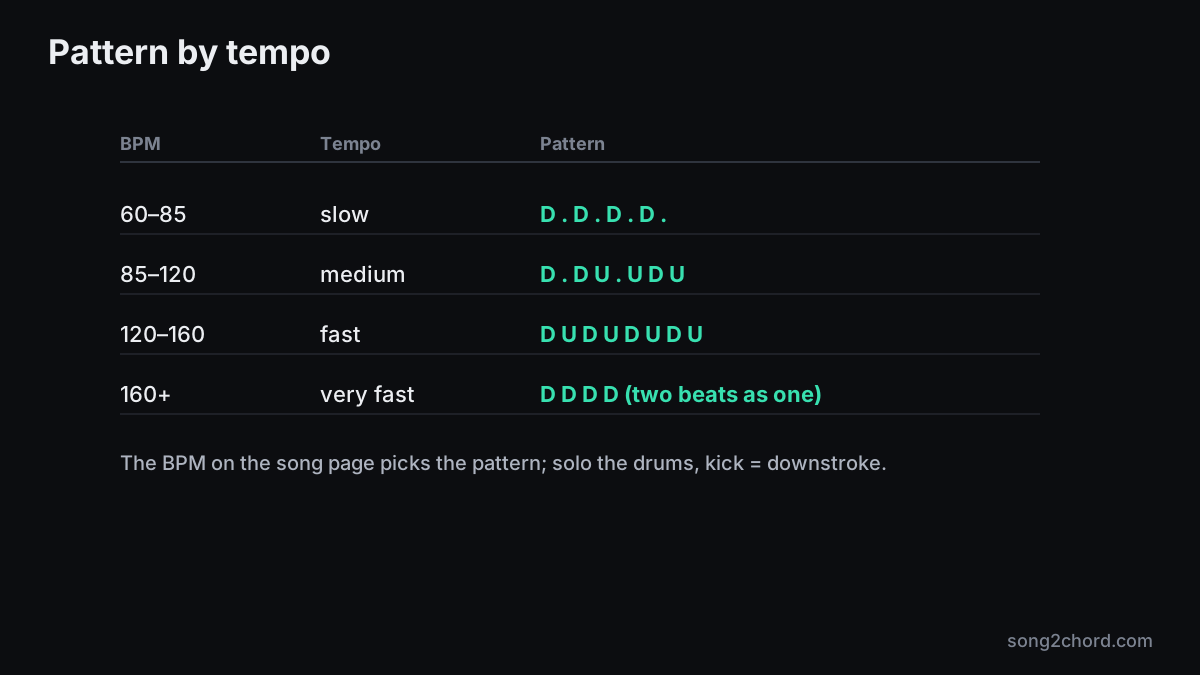
The BPM on the song page tells you the pattern:
- 60–85 BPM (slow). Straight quarters or arpeggios. Classic pop works too, but soften the strokes; a busy pattern makes a slow song feel rushed.
- 85–120 BPM (medium). Classic pop: D . D U . U D U. Most pop, acoustic rock and singer-songwriter material lives here.
- 120–160 BPM (fast). Eighths, or classic pop in half time (stretch the pattern over two bars). Keep the strokes short and play from the wrist, not the arm.
- 160+ BPM. Halve the pattern: count every two beats as one. Punk and fast rock usually want straight downstrokes (D D D D) in eighths.
Dynamics: accents and muting
The same pattern can be played evenly or with accents on 2 and 4. In pop and rock the snare is on 2 and 4; hit those a little harder and the song "walks". The second tool is palm muting: the edge of the right hand rests lightly by the bridge and the strings ring short. Muting the verse and opening up the chorus is the easiest way to separate two sections that use the same chords. In the instrument tracks on our pages you can solo the rhythm guitar and hear how the original recording treats each section.
How to practise
- One chord (Em), right hand only, metronome at 70 BPM. Count the pattern out loud: "one, two and, and four and".
- Once the pattern is automatic, add two chords; change on the bar line without breaking the pattern.
- Loop the chorus in karaoke mode and play along with the record. Mute the vocals, unmute the drums: the drums are your metronome.
- At full tempo, try the pattern muted in one section and open in the next.
Which pattern for which song
Most songs in the catalogue (mid-tempo pop) go with the classic pop pattern; if the "most frequent changes" line on the page shows chords moving mid-bar, play the second half of the pattern on the new chord. Not sure? Open the song, solo the drum track and swing your hand while you listen: the kick lands on your downstrokes, the hi-hat on your upstrokes. The same patterns apply on ukulele — see the ukulele guide; if your changes cannot keep up with the pattern, see faster chord changes.