Home › Guides › Faster chord changes: five exercises, two weeks
Faster chord changes: five exercises, two weeks
You can hold the chords but cannot change at song tempo. Common fingers, silent changes, the open-string bridge, loop practice and the metronome ladder — a plan you can measure.
Between holding a chord cleanly and changing to it at song tempo there are weeks, and most new guitarists quit in that gap because progress is invisible. What the five exercises below have in common is that they are countable: how many changes, how many BPM. Ten minutes a day for two weeks and the numbers show it.
First, the diagnosis
Slow changes have three causes, and each has its own exercise:
- Fingers land one at a time. You build the chord finger by finger instead of as a shape. Fix: silent changes (exercise 2).
- Fingers lift that did not need to. You raise the finger that could have stayed. Fix: common fingers (exercise 1).
- The right hand waits for the left. The rhythm stops until the shape is ready. Fix: the open-string bridge (exercise 3).
Exercise 1: common fingers
Between any two chords find the fingers that can stay or slide, and never lift them. Frequent examples:
| Change | What stays |
|---|---|
| C → Am | Index and middle stay put; only the ring finger drops from string 5 to string 3 |
| Em → Am | Same shape slides down one string; the index joins in |
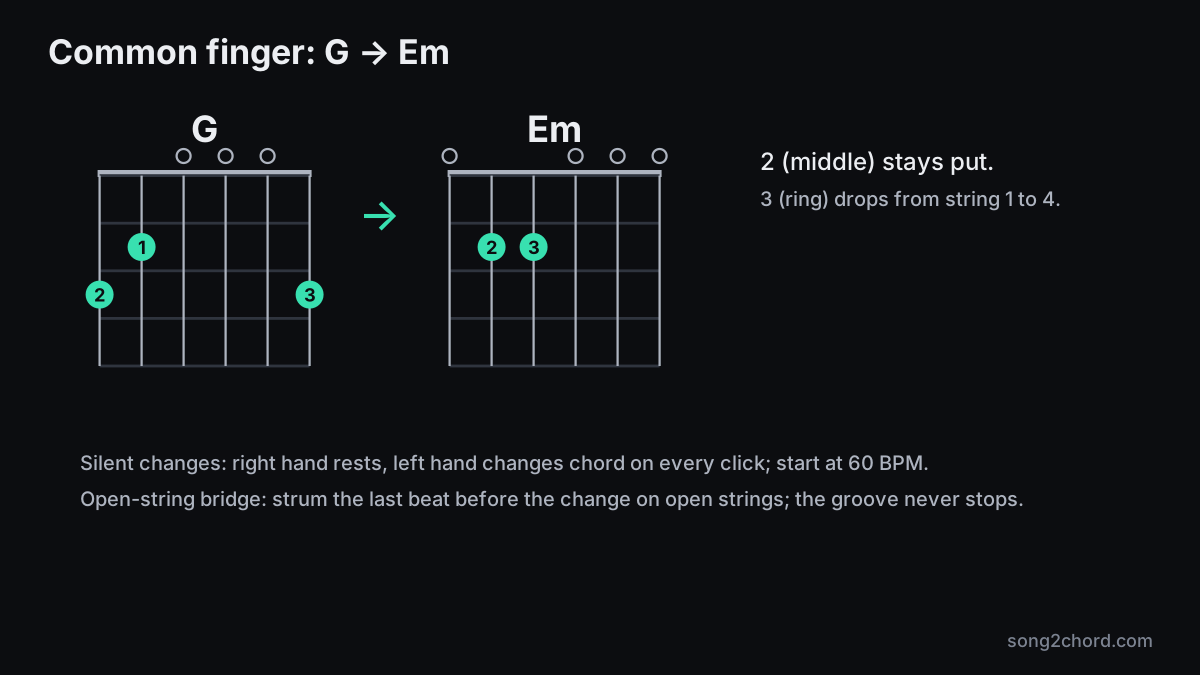
| G → Em | The middle finger stays on string 5, fret 2 |
| D → A | All three fingers move up one string together and flatten |
| Am → E | Same shape, one string up |
| C → G | Ring from string 5 to 6, middle from 4 to 5; the hand keeps its form |
Ten round trips per pair, feeling the common finger slide along the string.
Exercise 2: silent changes
The right hand does nothing. Metronome at 60 BPM; on every click the left hand moves to the next chord with all fingers landing at once. If it is not clean, drop to 50. Four clean clicks in a row, add 5 BPM. This teaches the hand to form the chord as one shape instead of assembling it, and within ten days the shape starts forming in the air.
Exercise 3: the open-string bridge
Strum the last beat before a change (usually the "and") on open strings: the left hand leaves a beat early and travels to the new chord, the right hand never stops. The ear does not register that short open strum and the groove never breaks. Professional recordings do this too; look closely at the tabs on our pages and you will see open strings at the ends of bars. Exercise: four beats on one chord, the fourth open, then the next chord; start at 70 BPM.
Exercise 4: loop practice
The hard change lives in one spot in the song, not everywhere. In karaoke mode on our pages loop that section (last two bars of the chorus, the bridge entry…) and repeat only those two bars at full speed. Playing the whole song from the top means spending three minutes for the three seconds that matter. Ten clean repeats in the loop, then once through.
Exercise 5: the metronome ladder
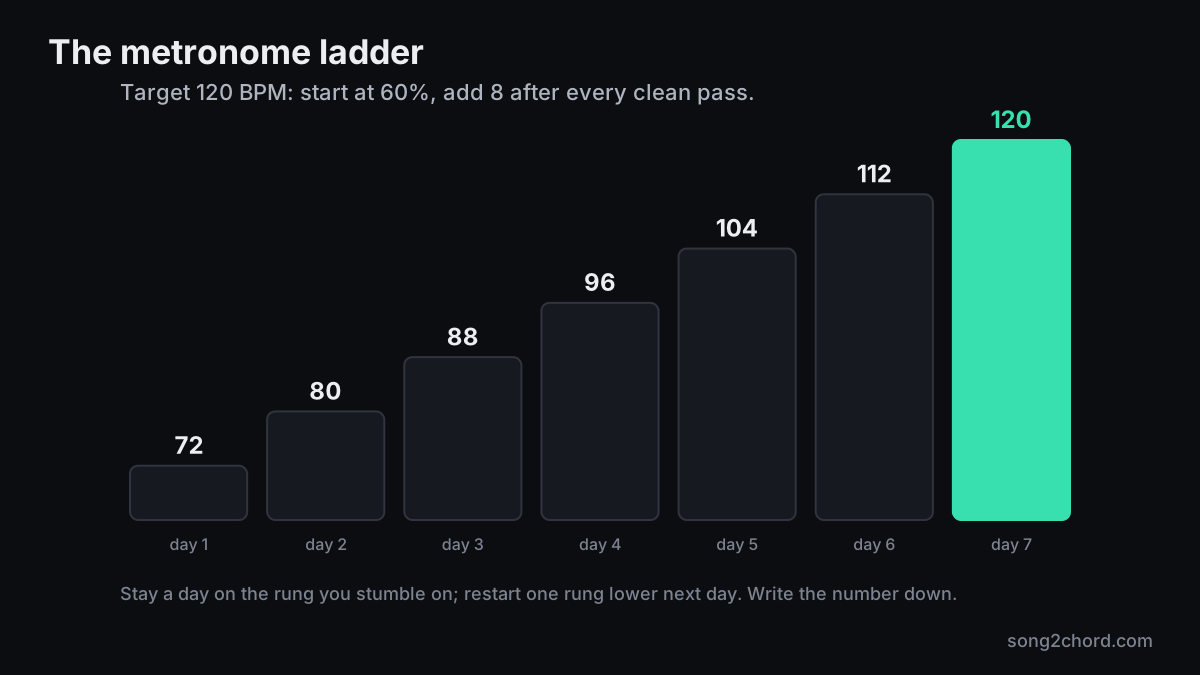
Start at 60% of the target tempo — for a 120 BPM song, 72. One clean pass, add 8 BPM. Stay a day on the rung where you stumble; the next day restart one rung below. Write the numbers down: "Fri 88, Sat 96". Visible progress is the cure for quitting.
The two-week plan
| Days | Time | What |
|---|---|---|
| 1–3 | 10 min | Common fingers (3 pairs) + silent changes at 60 BPM |
| 4–7 | 10 min | Silent changes at 70–80 BPM + open-string bridge |
| 8–11 | 12 min | The song's hard section on loop + metronome ladder |
| 12–14 | 12 min | Whole song at 90% of target tempo |
Which song
Pick a four-chord song where the same loop repeats; the top of the easy chords list is full of them. The "most frequent changes" line on a song page tells you which pair to drill: the change that repeats most is the one that pays most. If the pair involves a barre, read the barre guide first; if a capo opens it up, the capo guide.