Home › Guides › Ukulele for beginners and guitarists: tuning, the first four chords, and how it differs
Ukulele for beginners and guitarists: tuning, the first four chords, and how it differs
Ukulele tuning (GCEA), why guitar chords become different shapes on the uke, the first four chords (C, Am, F, G), and how to use a guitar chord page on ukulele.
The ukulele has four nylon strings and a short neck; it sounds good on day one and does not hurt your fingertips. For a guitarist it has an extra advantage: the logic of the chords is identical, only the shapes differ. This guide covers tuning and the first chords for someone starting from zero, and answers the guitarist's question — how do I play the chords on a guitar page on a ukulele?
Tuning: G C E A
Standard ukulele tuning, from the string nearest you outward, is G–C–E–A. The odd part: the top G string is not the lowest — it is thin ("re-entrant" tuning). So the strings do not get lower in order; the lowest pitch is the C in the middle. That is why a uke has no bass and its chords sound bright. Any phone tuner works; fresh nylon strings keep slipping for a week, so check tuning every time you pick it up.
Why guitar chords are different shapes
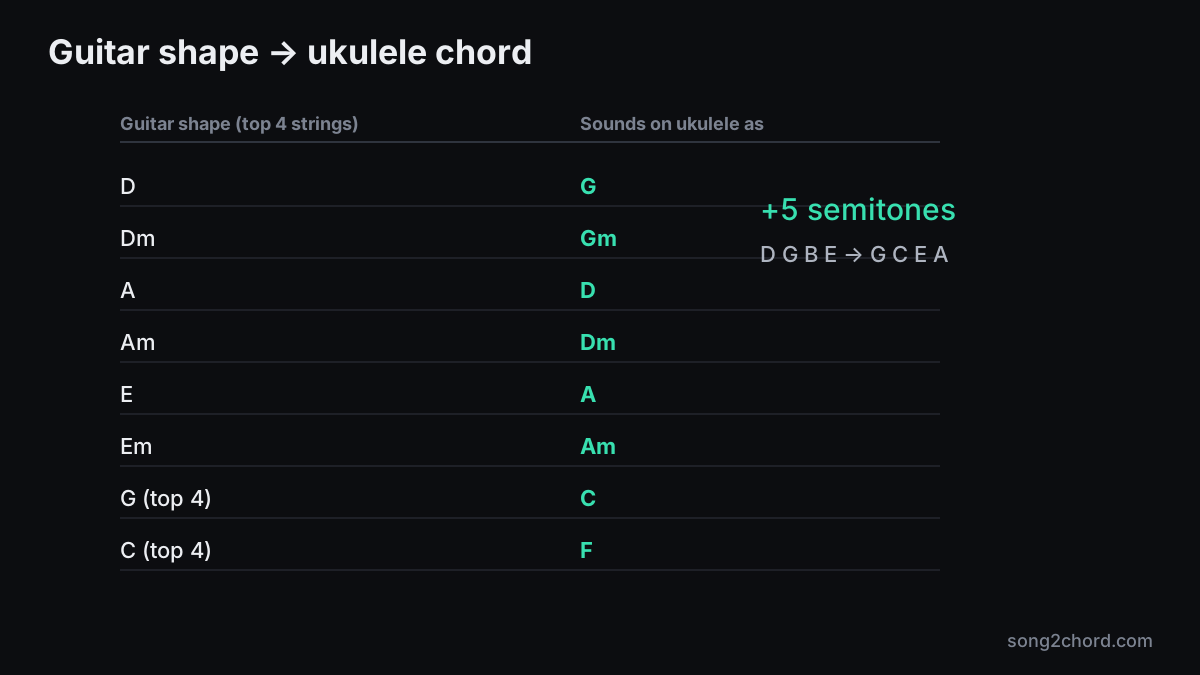
Ukulele tuning is the guitar's top four strings (D–G–B–E) raised by five semitones (G–C–E–A). That means any shape you hold on the guitar's top four strings sounds five semitones higher on a uke. The guitar D shape is a ukulele G; the guitar A shape is a ukulele D; the guitar E shape (top four strings) is a ukulele A. If you play guitar, you already know most ukulele chords — just under other names.
| Guitar shape (top 4 strings) | Sounds on ukulele as |
|---|---|
| D | G |
| Dm | Gm |
| A | D |
| Am | Dm |
| E | A |
| Em | Am |
| G (top 4) | C |
| C (top 4) | F |
The first four chords
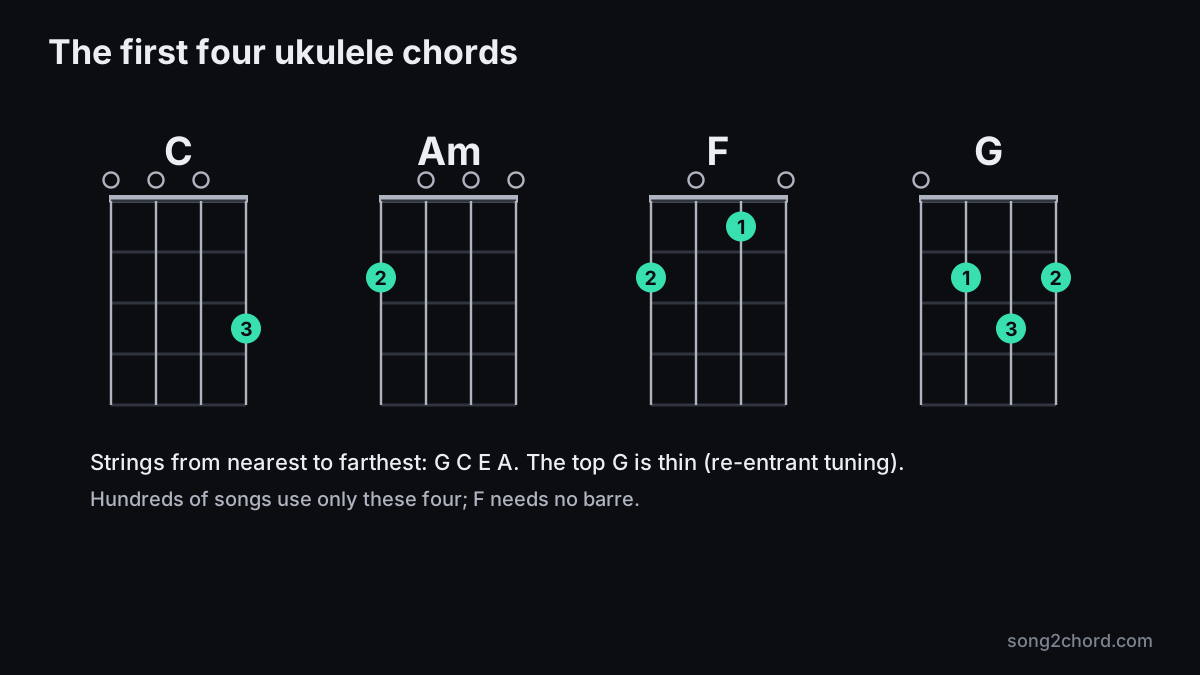
The four most used ukulele chords are C, Am, F and G; hundreds of songs need nothing else. Shapes in G–C–E–A order, 0 = open string:
- C — 0 0 0 3. One finger: A string, fret 3. The easiest uke chord.
- Am — 2 0 0 0. One finger: G string, fret 2.
- F — 2 0 1 0. Two fingers: G string fret 2, E string fret 1. Unlike guitar F there is no barre; F is easy on ukulele.
- G — 0 2 3 2. A three-finger triangle; the same shape as guitar D.
Next up: Dm (2 2 1 0), D (2 2 2 0, three fingers in a row or a small one-finger barre), Em (0 4 3 2), A (2 1 0 0), E (4 4 4 2 — the ukulele's "hard chord"; most songs get by with E7 = 1 2 0 2).
The chords that are hard on ukulele
Some chords that are easy on guitar are cramped on uke: E, B, Bb, Bm, F#m. They have no open shape in first position and need a small barre. The ukulele section on our song pages computes exactly this: whether the song's chords have open uke shapes, and whether a capo opens them up. The ukulele chords list ranks the songs playable with open shapes or a small capo. On a uke a capo makes sense up to fret 5; beyond that the neck runs out.
Using a guitar chord page on ukulele
Chord names on our pages are instrument-independent: a C chord is C on guitar and on ukulele; only the shape changes. Switch the Guitar | Ukulele toggle next to the Concert mode button: the chord boxes and the fretboard turn into four strings and the capo suggestion is recomputed for uke. The "ukulele chords" section at the bottom lists the shapes as fret strings (e.g. F = 2010) — copy them if you practise offline.
The right hand
No pick on a ukulele; strum down with the nail of the index finger and up with its flesh. Strum where the neck meets the body, not over the sound hole (it sounds muffled there). A starter pattern: D D UD UD (down, down, up-down, up-down). See strumming patterns for more; every pattern there works on uke, just play lighter.
Your first song
Pick something that loops C–Am–F–G; the top of the ukulele chords list is marked "beginner". In karaoke mode slow the tempo, loop the chorus and lock the four chords to the lyrics. On a ukulele the first song usually comes in the first week; no waiting for calluses like on guitar.