Home › Guides › Easy guitar chords for beginners: the first 8 and how to practise them
Easy guitar chords for beginners: the first 8 and how to practise them
The eight open chords every beginner needs, the order to learn them in, where the fingers go, and the change exercises for the first two weeks. Ends with songs that use only these chords.
Thousands of songs are played with eight open chords: Em, Am, D, G, C, E, A, Dm. "Open" means some strings ring without being fretted and the shape stays within the first three frets. This guide gives you the order to learn them in, where each finger goes, and what to practise in the first two weeks. At the end there are links to real songs that use only these chords.
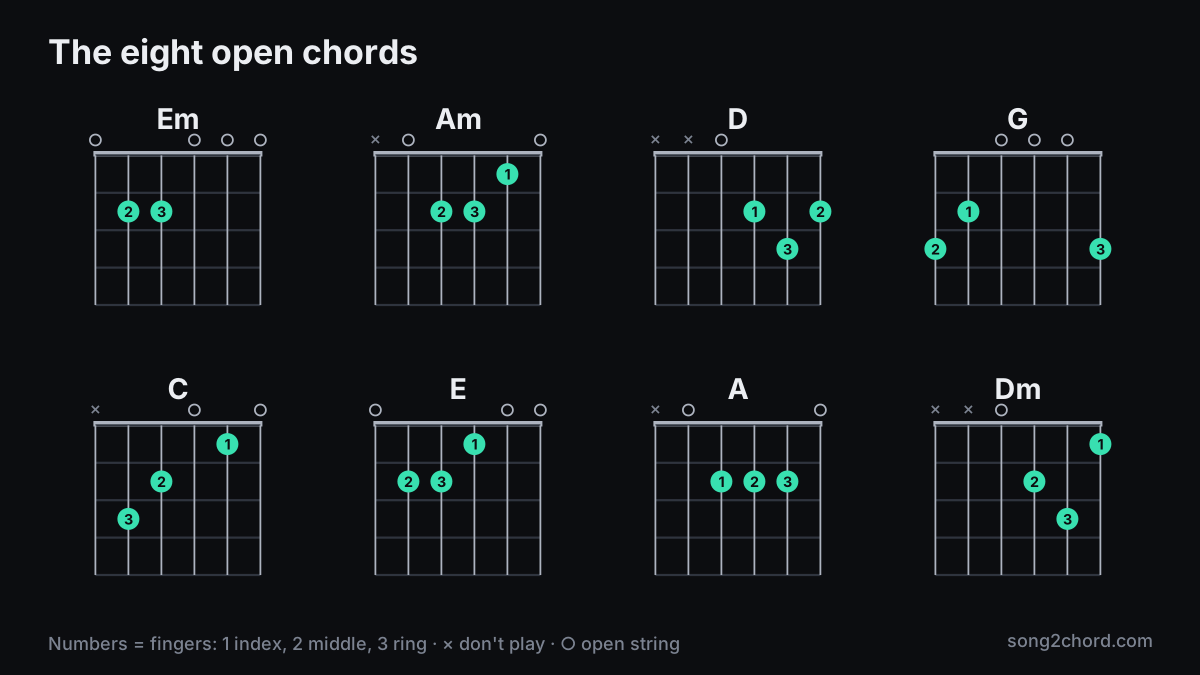
The order
Difficulty follows the number of fingers and how close together they sit:
- Em — two fingers, fret 2 on strings 5 and 4. The easiest chord; strum all six.
- Am — the Em shape moved one string down, plus the index finger on string 2, fret 1. Skip string 6.
- D — a three-finger triangle: string 3 fret 2, string 1 fret 2, string 2 fret 3. Strum only the top four strings.
- G — string 6 fret 3, string 5 fret 2, string 1 fret 3. The fingers spread wide; this is the chord that buzzes most in the first days.
- C — string 5 fret 3, string 4 fret 2, string 2 fret 1. Skip string 6.
- E — Em plus the index finger on string 3, fret 1.
- A — strings 4, 3 and 2 all at fret 2, side by side. Fitting three fingers into one fret takes a little time.
- Dm — D with string 1 lowered to fret 1; its sad sibling.
Where the fingers go
- Press with the fingertip, not the pad. Keep the nails short.
- Press close to the fret wire, not on top of it and not in the middle of the fret. Near the wire a light touch rings clean; in the middle you need force and get buzz.
- Thumb behind the neck, roughly opposite the middle finger. Wrapping the palm around the neck flattens the fingers and mutes the strings below them.
- After forming each chord, pick the strings one at a time. If one is dead, find the finger touching it and stand that finger up.
The first two weeks: change exercises
Holding a chord is easy; changing at song tempo is the hard part. Three exercises speed it up:
- Changes per minute. Pick two chords (Em → Am), go back and forth for one minute without a metronome and count clean changes. Write the number down daily; past 30, take a new pair. Hard pairs: G → C, C → D, D → A.
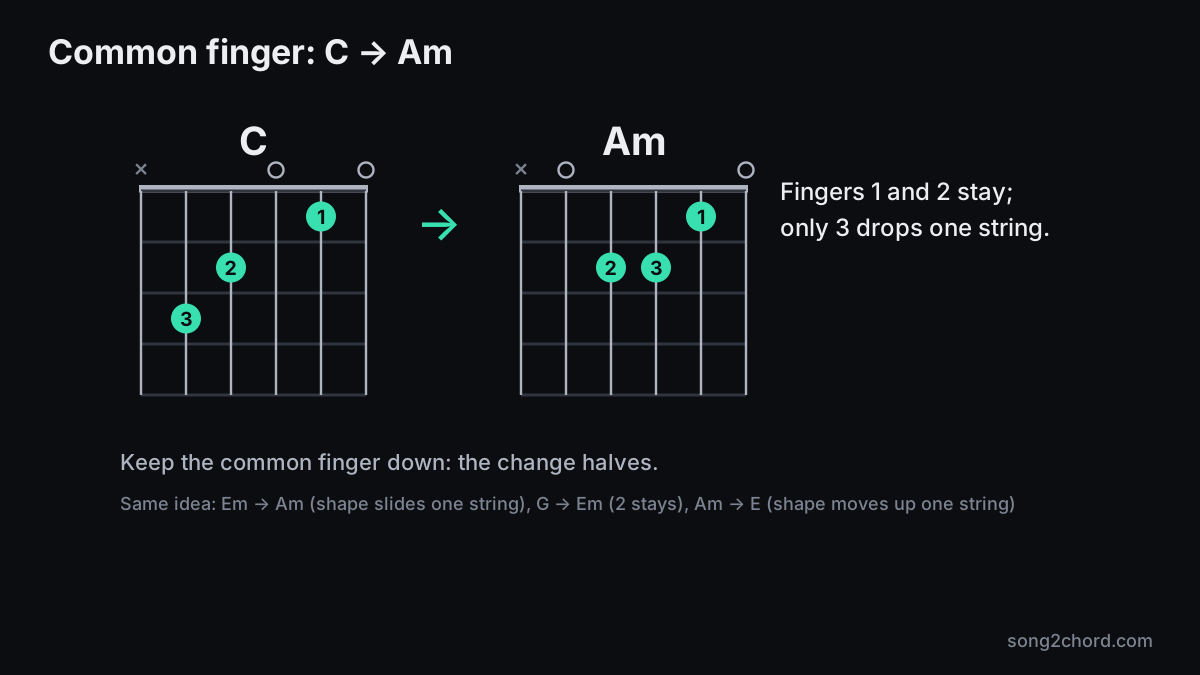
- Keep the common finger. Em → Am: ring and middle keep their shape and slide one string; C → Am: index and middle never move. Find the finger that can stay and do not lift it.
- Silent changes. The right hand rests; the left changes chord on every metronome click. Start at 60 BPM, add 5 when the changes are clean.
More methods in faster chord changes.
Songs that use only these eight
On our pages the difficulty of every song is computed from its chord shapes: four open chords is "beginner", even one barre chord is still "easy". The easy chords list runs from the fewest chords to the most, and songs that become easy with a capo are listed with the capo fret. For your first songs, pick from the top of that list: anything that loops Em–G–D–C or G–D–Em–C is ideal, because the same four chords repeat all the way through and you lock the changes to the tempo with the lyrics.
Three frequent questions
My fingertips hurt. Is that normal? Yes. Fifteen to twenty minutes a day is enough for the first two weeks; the pain ends when calluses form. If you get a blister, rest a day.
Why is F not on the list? F needs a barre. Early on you play it with a capo or as the "small F" (four strings, no barre); learn the full barre after a few weeks with the barre guide.
I lose the beat on every change. Everyone does. The fix is to strum the last beat before the change on open strings: the left hand leaves one beat early, the right hand never stops, and nobody hears the gap. In karaoke mode on our pages you can loop one section and practise only that change.